
Database Indexing Strategies to Improve Performance
Practical database indexing strategies: composite index column order, covering indexes, write cost trade-offs, index bloat, and reviewing indexes as schemas evolve.
Concepts and best practices for schema management across SQL dialects.
Practical database indexing strategies: composite index column order, covering indexes, write cost trade-offs, index bloat, and reviewing indexes as schemas evolve.
How caching layers shield your database from repeat load, the difference between cache-aside and read-through, and why invalidation strategy matters most.
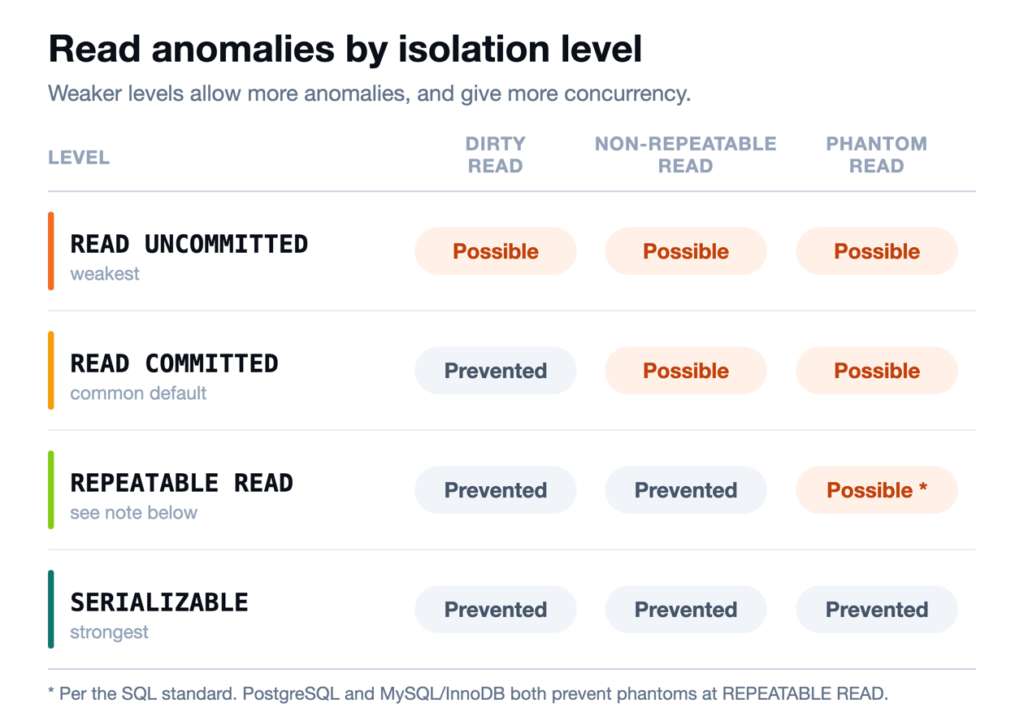
A guide to SQL isolation levels — Read Committed, Repeatable Read, Snapshot, and Serializable — covering trade-offs, write skew, and when to use each.
How to migrate a PostgreSQL schema to Amazon Redshift: data type mapping, unenforced constraints, distribution/sort keys, and in-place ALTER limits.
MySQL and MariaDB share a wire protocol but diverge on JSON types, sequences, generated columns, and CHECK constraint enforcement. Here's what breaks.
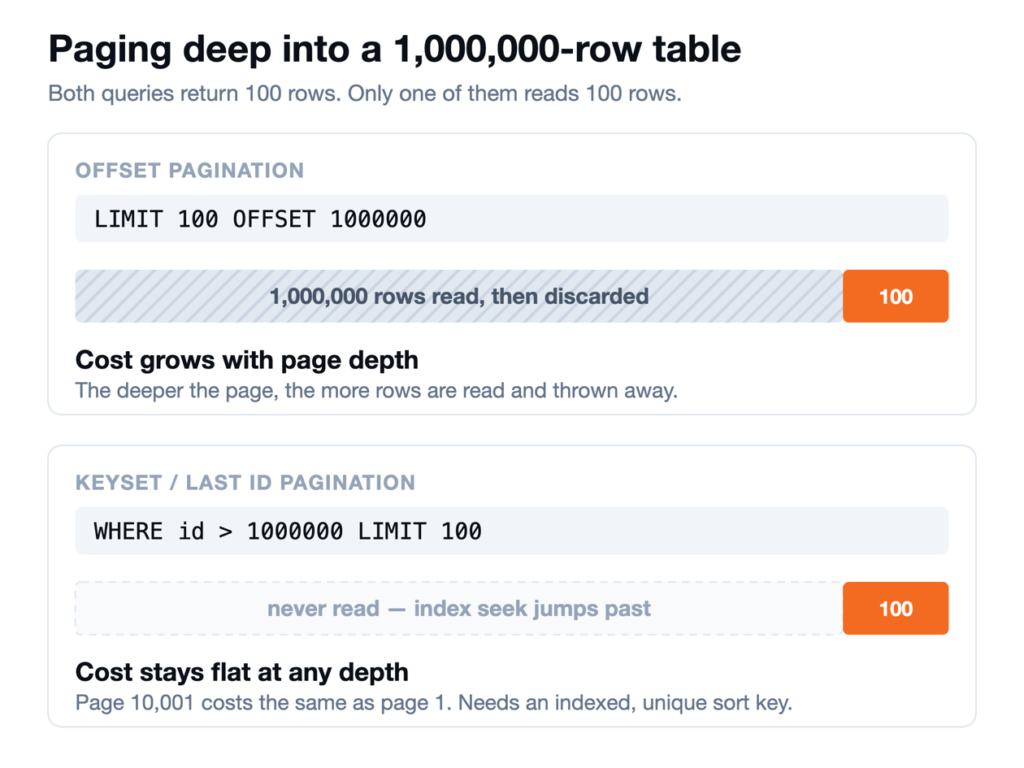
OFFSET pagination gets slower as tables grow and users page deeper in. Last ID (keyset/cursor) pagination stays fast and stable. Here's when to use each.
Views and materialized views rarely survive a cross-dialect migration unchanged. Here's what breaks, what Db2 MQTs and Postgres materialized views have in common, and how to migrate them safely.
How collation and charset defaults differ across MySQL, PostgreSQL, SQL Server, and Oracle, and how to catch mismatches before a migration ships.
Why CHECK, UNIQUE, FOREIGN KEY, and NOT NULL constraints matter as a last line of defense against concurrency bugs and bad data, alongside app validation.
Tables vs views compared: indexing, pagination, real-time reporting, and when a view is abstraction rather than a performance win.
