
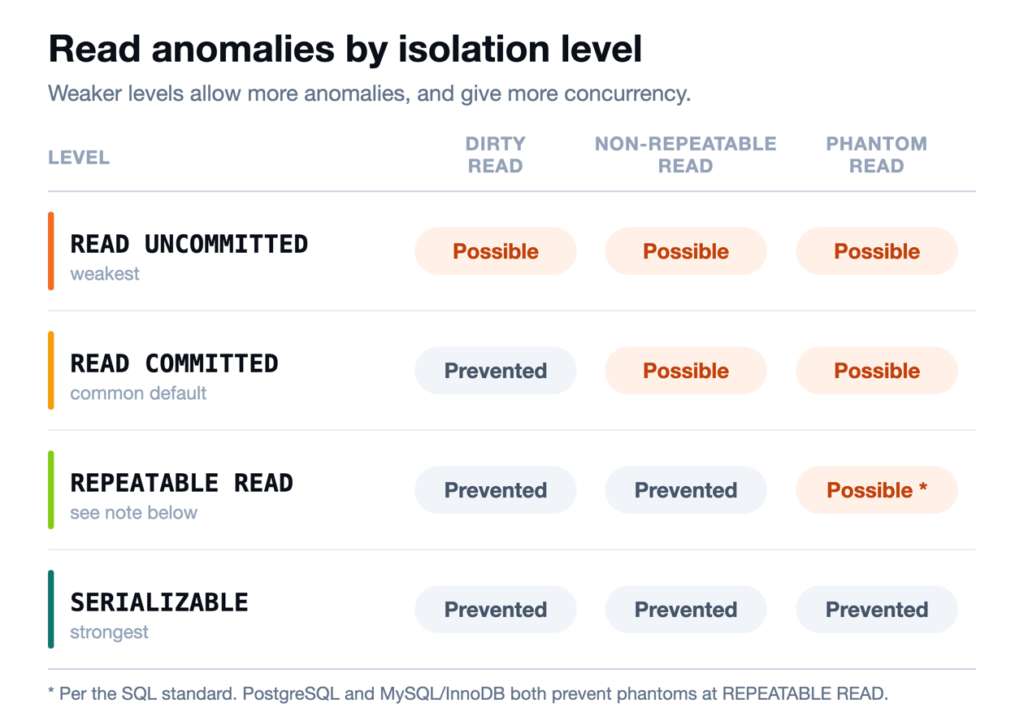
SQL Isolation Levels Explained: Read Committed, Snapshot, Repeatable Read, and Serializable
A guide to SQL isolation levels — Read Committed, Repeatable Read, Snapshot, and Serializable — covering trade-offs, write skew, and when to use each.

A guide to SQL isolation levels — Read Committed, Repeatable Read, Snapshot, and Serializable — covering trade-offs, write skew, and when to use each.
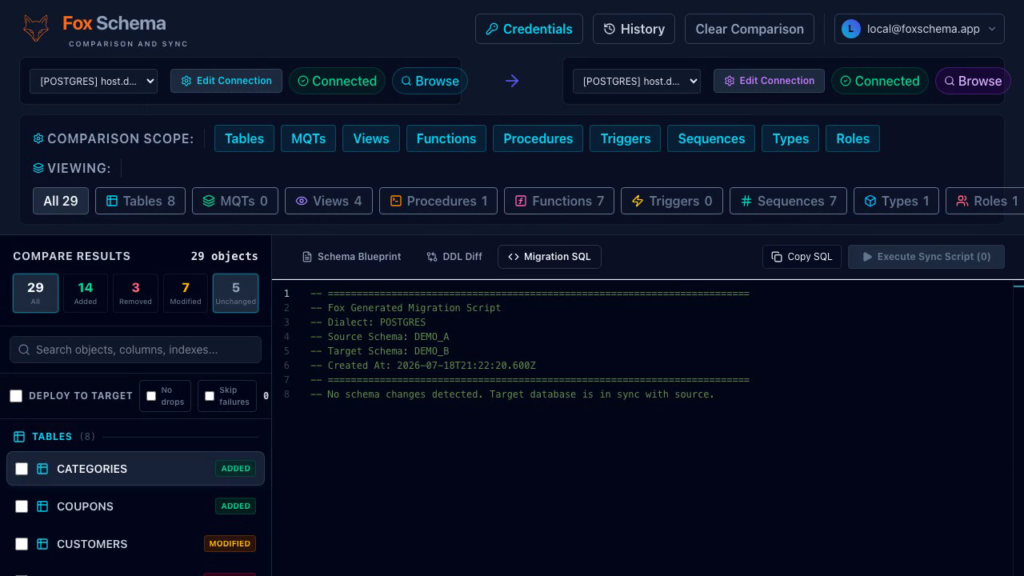
How to migrate a PostgreSQL schema to Amazon Redshift: data type mapping, unenforced constraints, distribution/sort keys, and in-place ALTER limits.
MySQL and MariaDB share a wire protocol but diverge on JSON types, sequences, generated columns, and CHECK constraint enforcement. Here's what breaks.
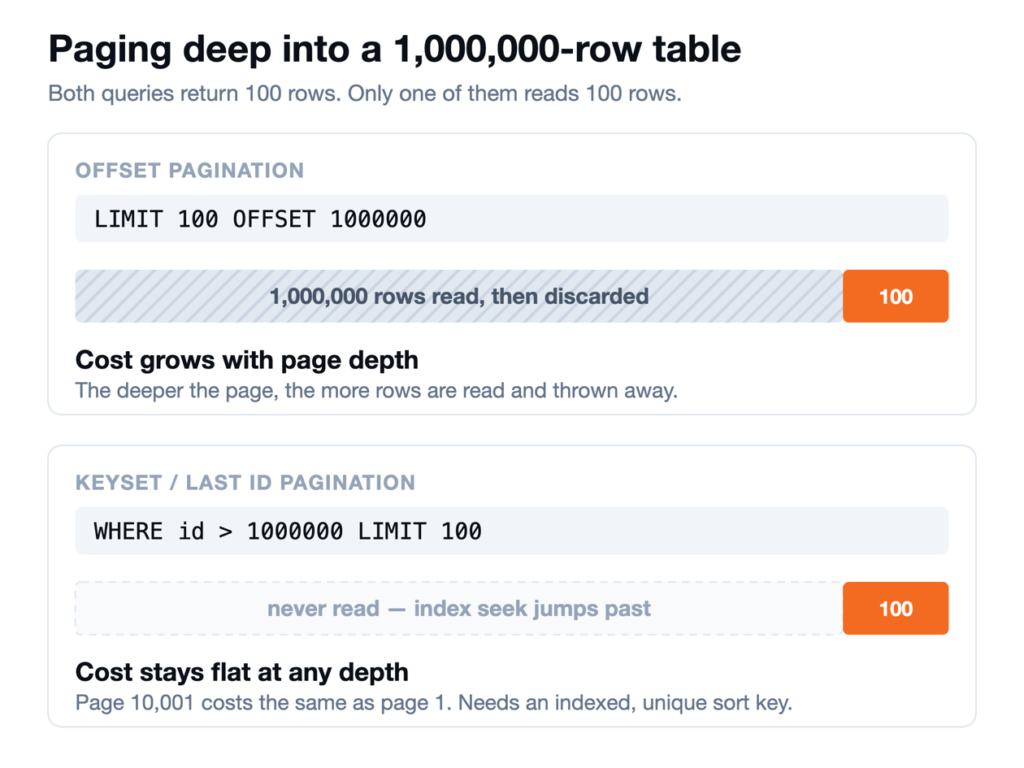
OFFSET pagination gets slower as tables grow and users page deeper in. Last ID (keyset/cursor) pagination stays fast and stable. Here's when to use each.
Views and materialized views rarely survive a cross-dialect migration unchanged. Here's what breaks, what Db2 MQTs and Postgres materialized views have in common, and how to migrate them safely.
How collation and charset defaults differ across MySQL, PostgreSQL, SQL Server, and Oracle, and how to catch mismatches before a migration ships.
Export an Excel sheet to CSV, import it into FoxSchema's SQL Editor, write real SQL queries and joins against it, then export results back to CSV.
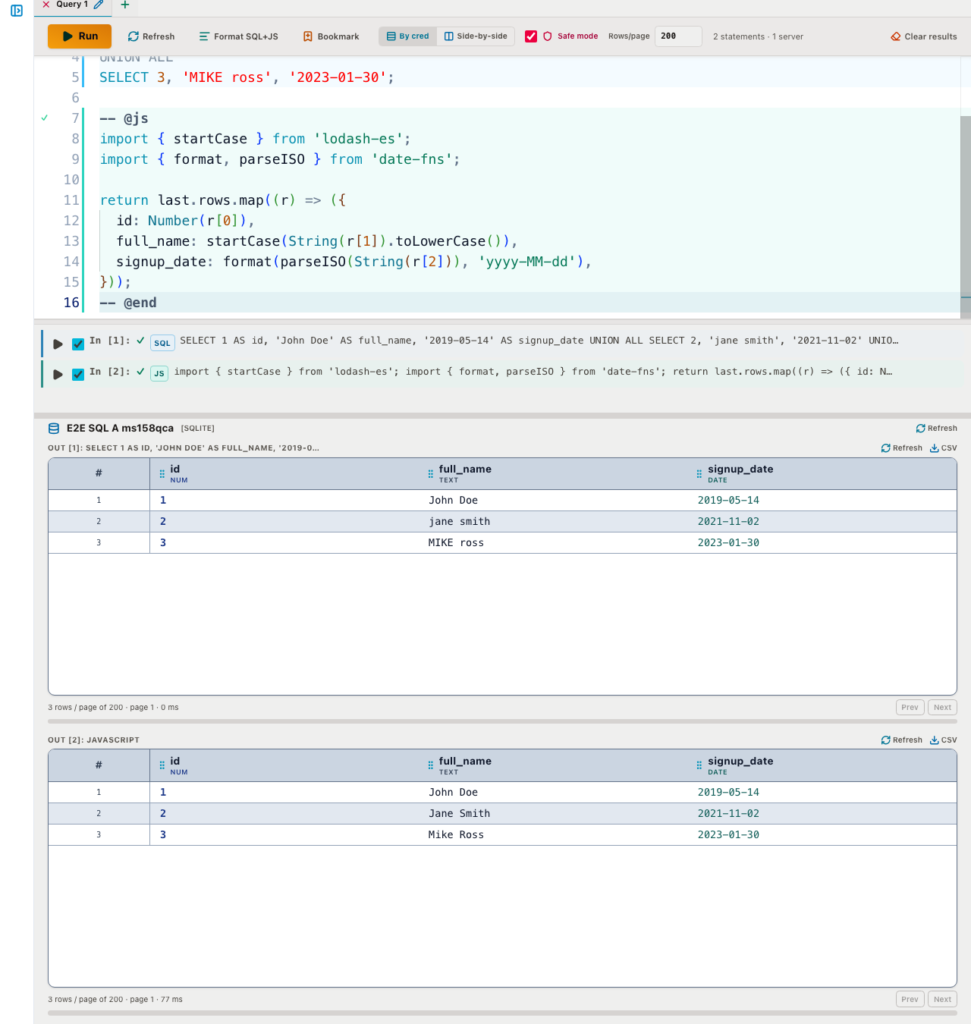
How to mask sensitive data for dev/staging using FoxSchema's bundled @faker-js/faker import in FoxScript, with deterministic seeding and Server Beam.
How FoxSchema's Server Insights utility surfaces connection pool health, active sessions, host resources, and table/index sizes per dialect.
How FoxSchema's Server Beam moves data across two live database connections using sql.on(alias), bind parameters, and a 20-call-per-run safety cap.
