
Database Constraints: The Defense Layer We Often Forget
Why CHECK, UNIQUE, FOREIGN KEY, and NOT NULL constraints matter as a last line of defense against concurrency bugs and bad data, alongside app validation.
Why CHECK, UNIQUE, FOREIGN KEY, and NOT NULL constraints matter as a last line of defense against concurrency bugs and bad data, alongside app validation.
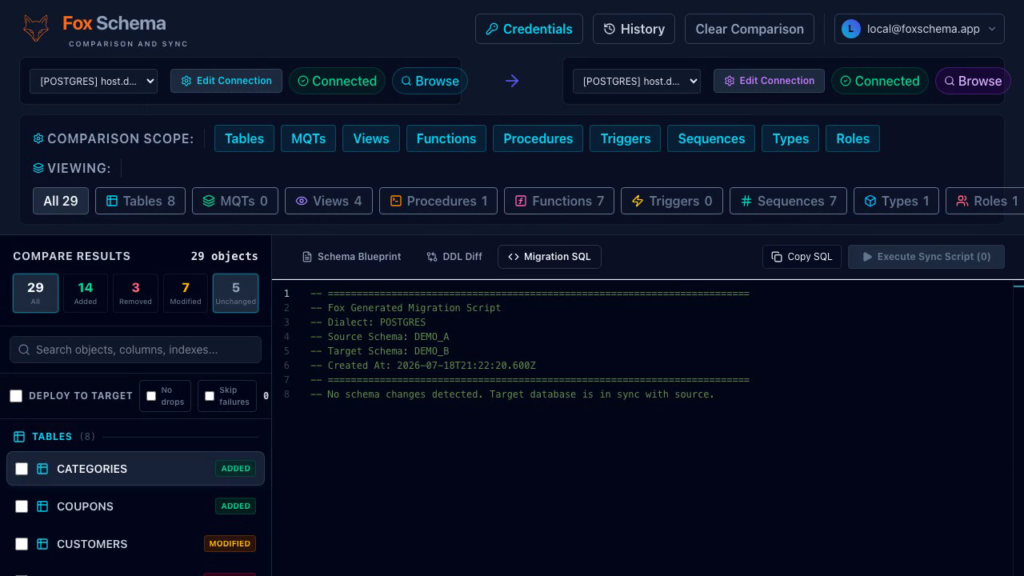
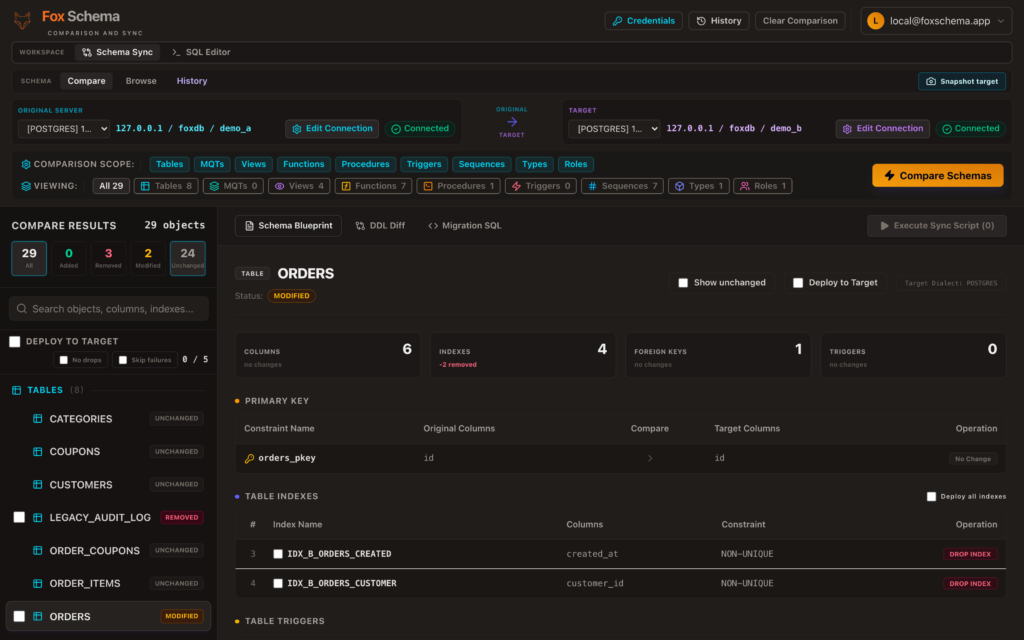
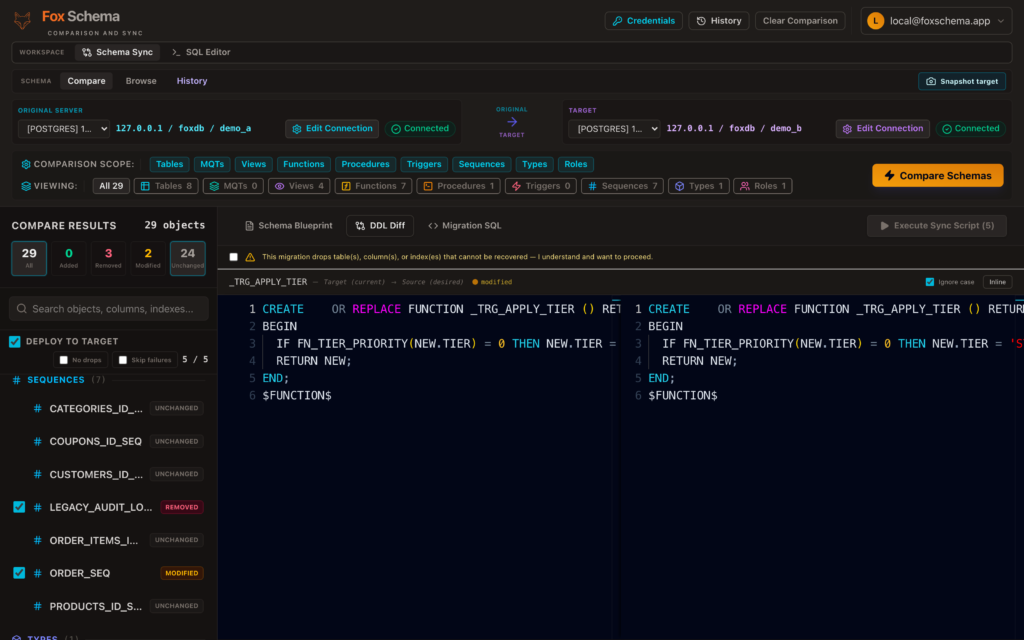
Learn what schema drift detection is, how to catch unsafe database changes across environments, and how FoxSchema helps teams review diffs before production.
Practical guidance on schema drift detection for engineering teams, driven by Analytics + Search Console demand on foxschema.com.
Tables vs views compared: indexing, pagination, real-time reporting, and when a view is abstraction rather than a performance win.
Stored procedures vs ORMs: a practical comparison of latency, transactions, consistency, testing, deployment, and horizontal scaling costs.
How MySQL and ClickHouse schemas differ: engine families, no indexes/FKs/triggers, Nullable() typing, and what to check before migrating.
How Db2 and PostgreSQL schemas differ — identity columns, tablespaces, naming, and types — plus a practical sequence for migrating safely.
Azure SQL Database and SQL Server share T-SQL syntax but diverge on collation, cross-database queries, instance-level objects, and tier limits. Here's what breaks.
How MariaDB and PostgreSQL schemas diverge on sequences, types, and casing, and how to generate a safe migration script instead of hand-translating DDL.
Practical ways to keep staging and production database schemas in sync and stop "works on staging" bugs before they ship.
